
How Ayurvedic De-Stress Therapy Helps Reduce Stress Naturally
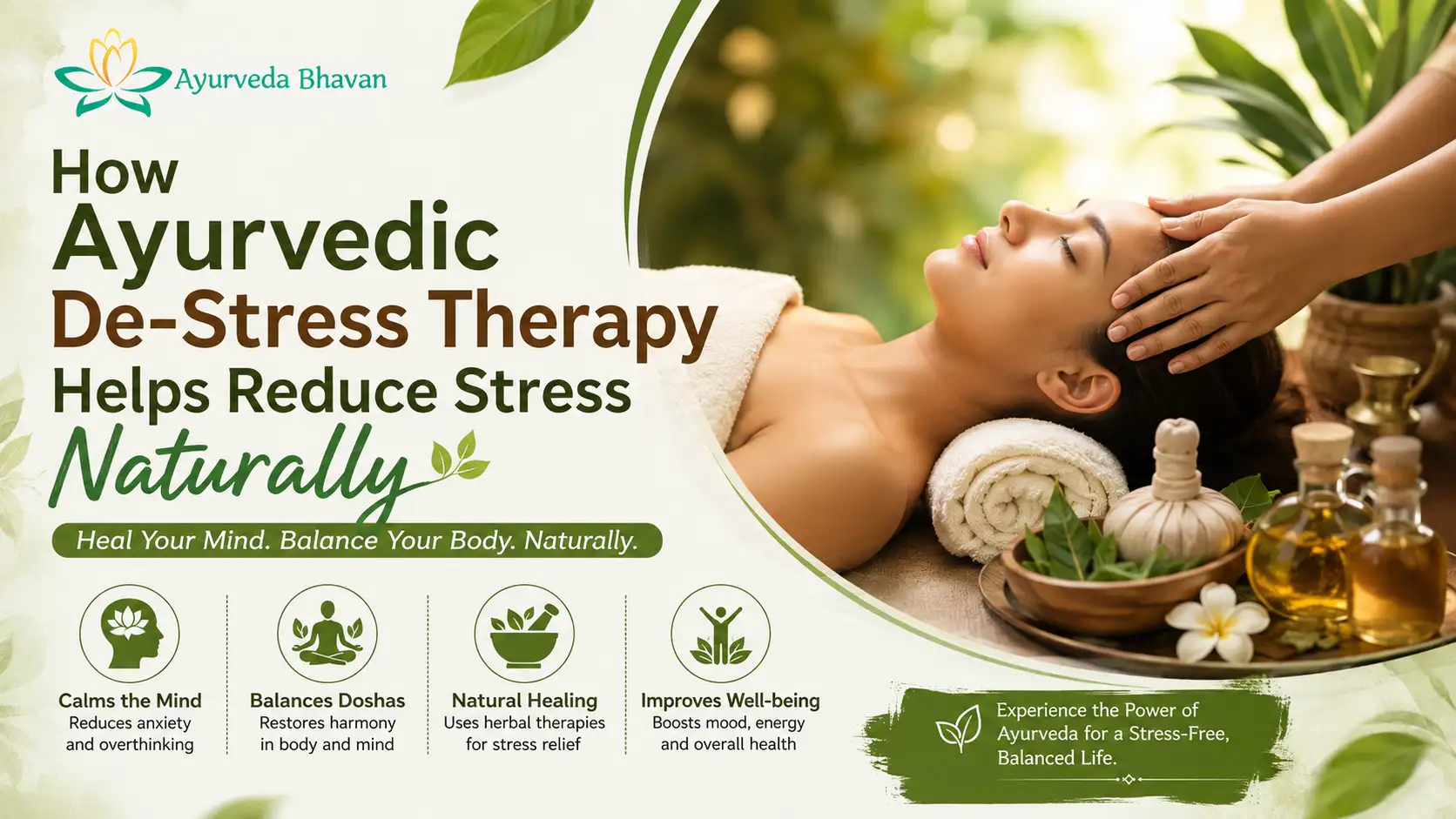
Stress has slowly seeped into our daily existence, and with work stress, personal stress, lack of proper rest, and exposure to screens all the time, we constantly remain active both mentally and physically. This results in wear and tear on our physical and psychological well-being in the long run. Although modern medicine offers a solution to this problem, many have resorted to age-old methods which actually target the source of the problem. This is where the concept of ayurvedic de-stress therapy comes into picture.
Ayurveda Bhavan sees many patients who are feeling exhausted, cannot fall asleep, or are generally feeling out of sorts without knowing what is wrong with them. In the majority of such cases, the reason behind such symptoms is disturbance in their doshas and nervous systems. Stress in ayurveda is seen from a holistic approach rather than only mentally.
In this blog, we’ll explain in simple words how Ayurveda helps manage stress, what therapies are involved, and why more people are choosing this natural path today.
What Is Ayurvedic De-Stress Therapy?
Ayurvedic de-stress therapy is a combination of body treatments, breathing practices, diet changes, and lifestyle guidance designed to calm the nervous system. Unlike quick relaxation techniques, it works on balancing the body from within.
According to Ayurveda, stress is mainly linked to an aggravated Vata dosha. When Vata is out of balance, a person may feel anxious, restless, or mentally scattered. The therapies used in Ayurvedic stress relief aim to pacify Vata and bring the body back into a state of calm.
Common Signs That You May Need Stress Relief Through Ayurveda
Before jumping into treatments, it helps to recognize the signs your body might be showing:
- Trouble falling asleep or staying asleep
- Constant tiredness even after rest
- Racing thoughts or overthinking
- Muscle tension, especially in the neck and shoulders
- Irritability or mood swings
- Digestive issues linked to stress
If these sound familiar, a natural stress reduction approach through Ayurveda could genuinely help.
Key Ayurvedic Therapies Used for Stress Relief
1. Shirodhara
This is one of the most popular Ayurvedic relaxation therapies. Warm herbal oil is poured in a slow, steady stream over the forehead. It sounds simple, but the effect on the mind is deep. Many people describe it as feeling like their thoughts finally “slow down.”
2. Abhyanga (Full Body Oil Massage)
A warm oil massage using herbs suited to your body type helps release physical tension. It also improves blood circulation and supports better sleep.
3. Nasya Therapy
Herbal oils or medicines are administered through the nasal passage. This therapy is known to clear mental fog and support emotional balance.
4. Pranayama and Meditation
Breathing exercises are a core part of holistic stress management. Simple practices like Anulom Vilom or Bhramari can calm the mind within minutes when done correctly.
5. Herbal Support
Herbs like Ashwagandha, Brahmi, and Jatamansi are commonly used in Ayurveda to support the nervous system and reduce anxiety naturally.
Why Choose a Natural Approach Over Quick Fixes?
Many people rely on short-term solutions for stress — caffeine, sleeping pills, or simply pushing through exhaustion. These may offer temporary relief but don’t address the underlying imbalance.
Ayurvedic stress relief works differently. It focuses on:
- Identifying the root cause of imbalance
- Personalizing treatment based on body type (dosha)
- Combining physical therapy with diet and daily routine changes
- Supporting long-term mental clarity, not just momentary calm
This is why holistic stress management through Ayurveda tends to offer results that last longer.
Simple Ayurvedic Habits You Can Start Today
You don’t always need a full therapy session to begin feeling better. Some small changes can support natural stress reduction at home:
- Sleep and wake up at consistent times
- Avoid heavy or processed food late at night
- Practice 5–10 minutes of deep breathing daily
- Warm oil self-massage once or twice a week
- Reduce screen exposure before bedtime
These habits, paired with occasional professional therapy, can make a noticeable difference over time.
Who Can Benefit From This Therapy?
Ayurvedic de-stress therapy isn’t only for people dealing with severe anxiety. It can help:
- Working professionals dealing with burnout
- Students facing exam or academic pressure
- New parents adjusting to lifestyle changes
- Anyone simply feeling mentally “overloaded”
Since the treatments are natural and gentle, most people can undergo them safely, though it’s always good to consult a practitioner first.
Final Thoughts
Stress may not disappear completely from our lives, but how we respond to it makes all the difference. Ayurveda offers a natural, time-tested path to manage stress without relying on quick fixes or heavy medication. By working on the body and mind together, it helps restore balance in a way that feels sustainable.
If you’re looking to experience this healing process yourself, consider exploring the Ayurvedic De-Stress Package in Rishikesh — a peaceful setting combined with traditional therapies that can help you reconnect with calm, the way it’s meant to be.
Recommended Posts
Best Ayurvedic Health and Beauty Treatment in Rishikesh
October 21, 2026


Ayurvedic Detox Package in Rishikesh with Prices
October 12, 2026