
Ayurveda vs Allopathy for Diabetes: Which Treatment Is Right for You?
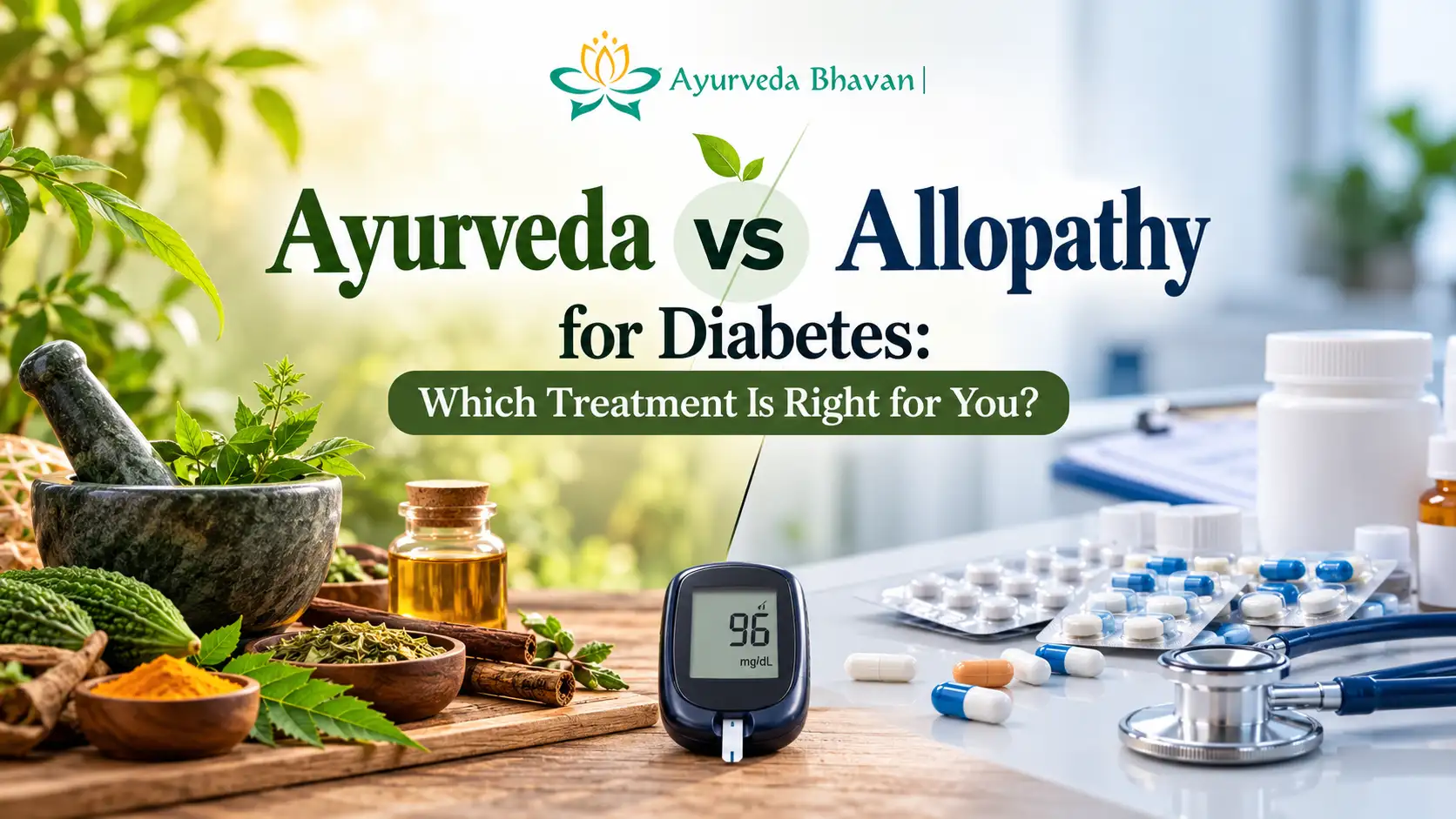
Diabetes has quietly become one of the most common health conditions across India, and if you or someone in your family has been recently diagnosed, you’ve probably faced this exact question: should I go with Ayurveda or stick to allopathy? It’s a fair question, and honestly, there’s no one-size-fits-all answer. Both systems have their own logic, strengths, and limitations.
At Ayurveda Bhavan, we meet people every week who are confused between the two, worried about long-term medicine dependency, or simply looking for a more natural way to manage their sugar levels. So let’s break this down in plain, simple language — no jargon, no sales pitch, just facts that help you decide what’s right for your body.
Understanding the Basic Difference Between Ayurveda and Allopathy
Before comparing Ayurveda vs Allopathy for diabetes, it helps to understand what each system is actually trying to do.
Allopathy treats diabetes mainly by controlling blood sugar levels through medicines or insulin. It works on the symptom — high glucose — and tries to bring it down quickly and predictably. This approach is backed by decades of clinical research and is especially useful in emergencies or when sugar levels are dangerously high.
Ayurveda, on the other hand, looks at diabetes (referred to as “Madhumeha” in classical texts) as a result of imbalance in the body’s doshas, poor digestion (weak Agni), and long-term lifestyle habits. Instead of only lowering sugar, Ayurveda tries to fix the root cause — improving digestion, metabolism, and the way your body processes food — so the problem doesn’t keep coming back in a more severe form.
In short: allopathy manages the number on your glucometer, while Ayurveda tries to manage the person behind the number.
How Allopathy Manages Diabetes
Allopathic treatment usually involves:
- Oral medications like Metformin to regulate blood sugar
- Insulin injections for more advanced or Type 1 diabetes
- Regular blood tests to track HbA1c and fasting/postprandial sugar
- Quick results, especially useful during sugar spikes or medical emergencies
This approach is reliable and scientifically proven, but many patients end up depending on medicines for life, and some also deal with side effects over time — weight gain, fatigue, or digestive issues being common complaints.
How Diabetes Management Through Ayurveda Works
Diabetes management through Ayurveda is a slower, more holistic process, but that’s exactly what makes it sustainable. It usually includes:
- Herbal formulations like Gudmar (Gymnema Sylvestre), Jamun seed powder, Neem, Karela, and Vijaysar — known to support natural insulin function
- Panchakarma therapies to detoxify the body and improve metabolic function
- Personalized diet plans based on your body constitution (Prakriti)
- Yoga and pranayama to reduce stress-related sugar spikes
- Lifestyle correction — sleep patterns, meal timing, and daily routine (Dinacharya)
The idea isn’t to replace insulin overnight or stop medication abruptly. A good Ayurvedic doctor will always work alongside your existing treatment, gradually helping your body regain its natural balance so that, over time, dependency on medicines may reduce — under proper medical supervision, of course.
If you’re exploring this route seriously, many people prefer getting it done where the tradition runs deep — an ayurvedic diabetes treatment in Rishikesh, for instance, combines authentic herbal protocols with the kind of peaceful, disciplined environment that genuinely supports healing, something that’s hard to replicate in a busy city clinic.
Is Ayurveda Better Than Allopathy? Let’s Be Honest About It
This is probably the most-searched question, and the honest answer is — it depends on what stage you’re at and what you need right now.
Ayurveda may work better when:
- You’re in the early or pre-diabetic stage
- You want to address the root cause, not just the symptom
- You’re open to lifestyle and dietary changes
- You want to reduce long-term medicine dependency
- You’re also dealing with related issues like obesity, poor digestion, or stress
Allopathy may work better when:
- Your sugar levels are extremely high and need immediate control
- You have Type 1 diabetes requiring insulin
- You need fast, measurable results for medical safety
- You’re managing diabetes alongside other serious conditions
So instead of asking “is Ayurveda better than allopathy,” a more useful question is — “what does my body need at this stage of my condition?” Many experienced practitioners actually recommend an integrated approach: using allopathy for immediate control while using Ayurveda to work on the underlying imbalance, gradually.
Can You Combine Both Treatments?
Yes, and in fact, this is becoming a common and sensible approach. Several patients continue their prescribed allopathic medication while also following an Ayurvedic lifestyle and herbal support plan — always under the guidance of qualified doctors from both sides. The key is communication. Never stop or reduce insulin or medication on your own just because you’ve started an herbal remedy. Diabetes, if mismanaged, can lead to serious complications, so any transition should be slow, supervised, and based on regular monitoring.
Things to Keep in Mind Before Choosing Either Path
- Diabetes is a lifelong condition — there’s no overnight “cure” in either system, so be cautious of anyone promising instant results
- Ayurveda requires patience and consistency; results build up over weeks and months, not days
- Allopathy requires regular monitoring to avoid dependency-related side effects
- Diet and daily habits matter more than people realize, no matter which system you choose
- Always consult qualified, registered practitioners — self-medication with herbs can be just as risky as unsupervised use of allopathic drugs
Frequently Asked Questions
Can Ayurveda completely cure diabetes?
Ayurveda doesn’t claim an instant or complete cure for diabetes, especially advanced or Type 1 cases. What it offers is better long-term management, improved metabolism, and in many pre-diabetic or early-stage cases, meaningful control over blood sugar through natural means.
Is it safe to switch from allopathy to Ayurveda directly?
No, sudden switching isn’t recommended. Any transition should happen gradually and only under medical supervision, with regular blood sugar monitoring.
How long does Ayurvedic treatment take to show results in diabetes?
Most patients start noticing changes in energy levels and digestion within a few weeks, while visible improvement in sugar levels typically takes a few months of consistent treatment, diet, and lifestyle changes.
Which is more affordable — Ayurveda or allopathy?
Allopathic medicines may seem cheaper in the short run, but with long-term use, costs add up. Ayurvedic treatment often involves a higher initial investment (consultations, therapies, herbs) but can reduce overall dependency over time.
Final Thoughts
There’s no universal winner in the Ayurveda vs allopathy debate — it genuinely depends on your current health condition, how advanced your diabetes is, and what kind of lifestyle changes you’re willing to commit to. Allopathy gives you quick, reliable control; Ayurveda gives you a path toward long-term balance and reduced dependency, provided you’re patient and consistent.
At Ayurveda Bhavan, we believe the smartest approach isn’t choosing one over the other blindly — it’s understanding your body well enough to know what it actually needs, and working with qualified experts who can guide you safely, whichever path you choose.
Recommended Posts

Ayurvedic Detox Package in Rishikesh with Prices
October 12, 2026

5 Easy Yoga Poses to Support Healthy Hair Growth
October 6, 2026

Top 10 Best Yoga Retreat Centres in Rishikesh
September 28, 2026