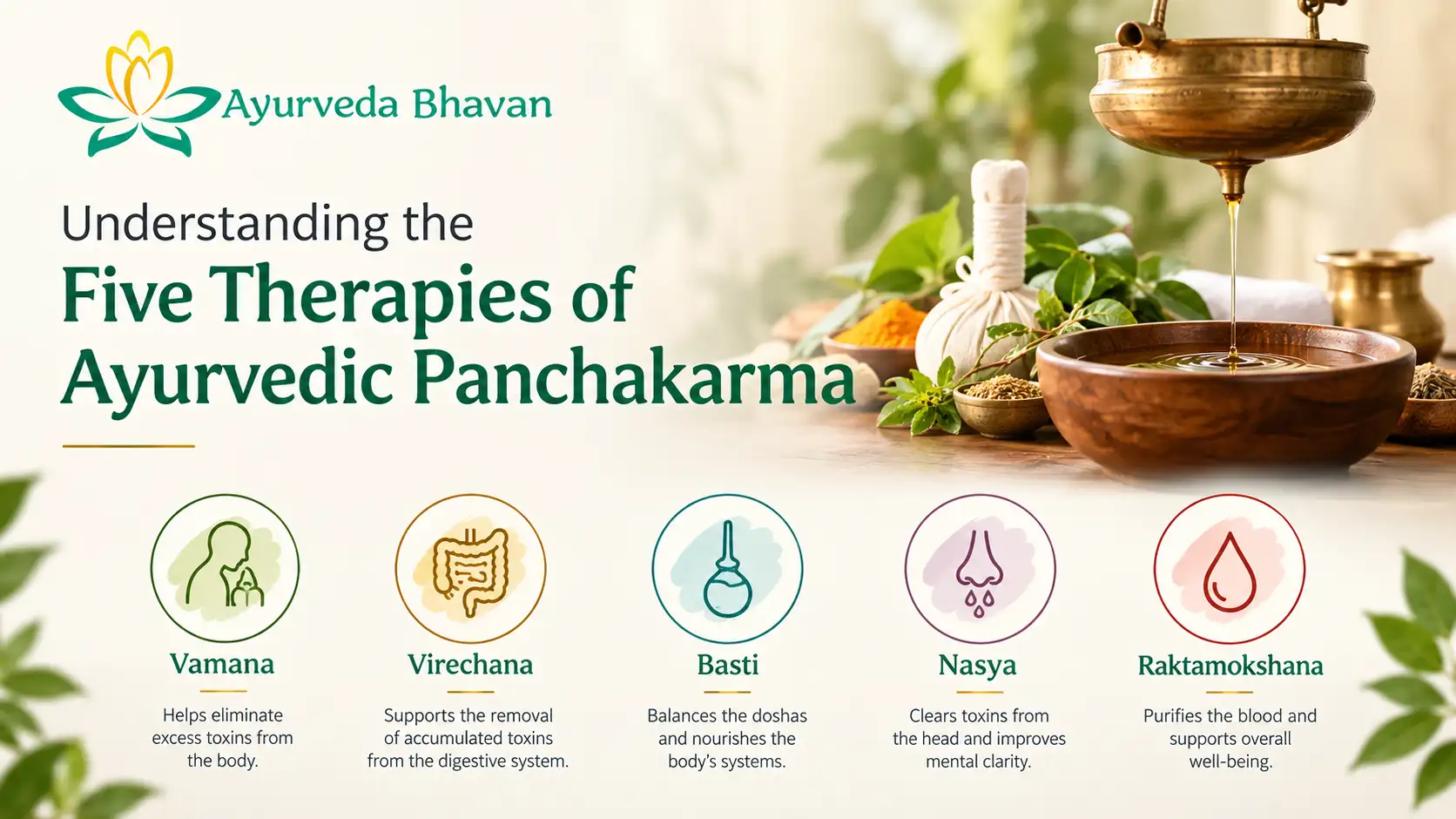
Understanding the 5 Therapies of Ayurvedic Panchakarma
At Ayurveda Bhavan, it is not uncommon for us to come across individuals who have at some point come across the term “Panchakarma” through their friend, from the wellness reel, or even from a medical professional, but do not understand much about it. Don’t be worried if that describes you, by the time you’re done reading this blog, you’ll know everything there is to know about Panchakarma.
What Does Panchakarma Actually Mean?
“Panch” means five, while “Karma” means action or treatment. Therefore, Panchakarma can be defined as “five actions” or five treatments carried out in the practice of Ayurveda in order to cleanse the body of toxins known as ama.
In simple words, it can be described as a process through which one cleanses his or her body completely from the accumulated stresses and other negative factors, just like when a phone becomes filled with unnecessary applications and files over time and requires a thorough cleansing.
The majority of individuals nowadays seek a complete healing treatment, and this is exactly the reason why ayurvedic panchakarma package Rishikesh has become so popular recently.
Why Is Panchakarma Important?
Before we get into the five therapies, it helps to understand why this process matters:
- It removes deep-rooted toxins, not just surface-level symptoms
- It balances the three doshas — Vata, Pitta, and Kapha
- It improves digestion, sleep, and mental clarity
- It supports long-term immunity instead of temporary relief
Unlike quick fixes, Panchakarma works at the root level. That’s also why people seeking genuine Ayurvedic Treatment in Rishikesh often choose this path over regular medication — because it treats the cause, not just the symptom.
Here the 5 Therapies of Ayurvedic Panchakarma
1. Vamana (Therapeutic Vomiting)
It is primarily used to regulate any surplus of Kapha dosha. Even though it may sound unpleasant, it is a process under medical supervision – not something you do without thinking about consequences.
Using herbs, the body is stimulated to release any mucus or toxic substances from the upper digestive tract. People with problems like persistent cough, asthma, skin conditions, or poor digestion should try this treatment.
2. Virechana (Purgation Therapy)
Virechana is used for regulation of Pitta dosha. This treatment involves the use of herbal laxatives for purifying the intestines and the liver.
If a person has problems like acidity, rashes on the skin, inflammation, or anything related to the liver, then this treatment is usually suggested.
3. Basti (Medicated Enema)
Basti therapy is seen as one of the most potent treatments in Panchakarma, especially for Vata dosha imbalance.
This technique entails the use of herbs and herbal oil into the colon. As Vata controls the nervous system and the joints, this treatment is very effective for individuals who suffer from joint pains, arthritis, constipation, and anxiety disorders.
4. Nasya (Nasal Therapy)
The Nasya therapy is aimed at cleansing the head and neck area. This is achieved by using medicated oils and herbs via the nasal passages to cleanse the sinus area.
The therapy is used to treat migraine headaches, sinusitis, hair fall, and mind fog.
5. Raktamokshana (Blood Purification)
The fifth therapy focuses on purifying the blood. In modern practice, this is done in very controlled and hygienic ways, often through natural methods rather than invasive techniques.
It’s typically suggested for skin disorders, repeated infections, or conditions linked to impure blood. Not everyone needs this therapy — it depends on individual body constitution and current health condition.
How Panchakarma Therapies Work Together
These five therapies aren’t meant to be used randomly. A certified Ayurvedic doctor first examines your body type (Prakriti), current imbalance, and health history. Based on that, one or more therapies are selected — not all five are given to every person.
This is why self-treatment at home is not recommended. Panchakarma should always be done under expert supervision, ideally at a center that follows authentic Ayurvedic protocols.
Simple Ayurvedic Panchakarma Therapies Tips
If you’re planning to go through this process, here are a few easy tips to keep in mind:
- Avoid heavy, oily, or processed food a few days before starting
- Keep your schedule light — this is not the week for back-to-back meetings
- Stay hydrated with warm water instead of cold drinks
- Follow the post-therapy diet strictly, as the body is extremely sensitive after detox
- Choose a center with experienced practitioners, not just a spa-style setup
These small steps can make your healing journey smoother and more effective.
Who Should Consider Panchakarma?
Panchakarma isn’t only for people who are sick. Many healthy individuals take it once or twice a year as a preventive measure — similar to a regular health check-up, but for deep internal cleansing.
It can help with:
- Chronic stress and fatigue
- Digestive issues
- Skin and hair problems
- Joint pain and stiffness
- Sleep disturbances
- General detox and rejuvenation
Frequently Asked Questions
-Is Panchakarma safe for everyone?
Most healthy adults can undergo Panchakarma, but pregnant women, very elderly individuals, or people with certain medical conditions should consult a doctor first.
-How many days does Panchakarma usually take?
It can range from a few days to a few weeks, depending on the therapies chosen and the person’s health goals.
-Does Panchakarma hurt?
No. While some therapies may feel unusual at first, they are not painful. They are done gently and under professional guidance.
-Can I do all five therapies at once?
Not necessarily. A practitioner decides which therapies suit your body type and current health condition — it’s rarely a one-size-fits-all approach.
Final Thoughts
Panchakarma is no fad but an ancient form of treatment that has been around for hundreds of years. Knowing about the five treatments offered through Panchakarma – Vamana, Virechana, Basti, Nasya, and Raktamokshana – will surely enable you to know which route to take when you decide to go for it.
Ayurveda Bhavan can guide you in the right direction in case you need a diagnosis and want a safe experience.
Recommended Posts
Ayurvedic Detox Myths vs Facts: What You Should Know
October 24, 2026

6 Ayurvedic Detox Practices to Clean Your Body & Mind Naturally
October 1, 2026
What Is Ayurvedic Rejuvenation & How Does It Transform Health?
September 8, 2026