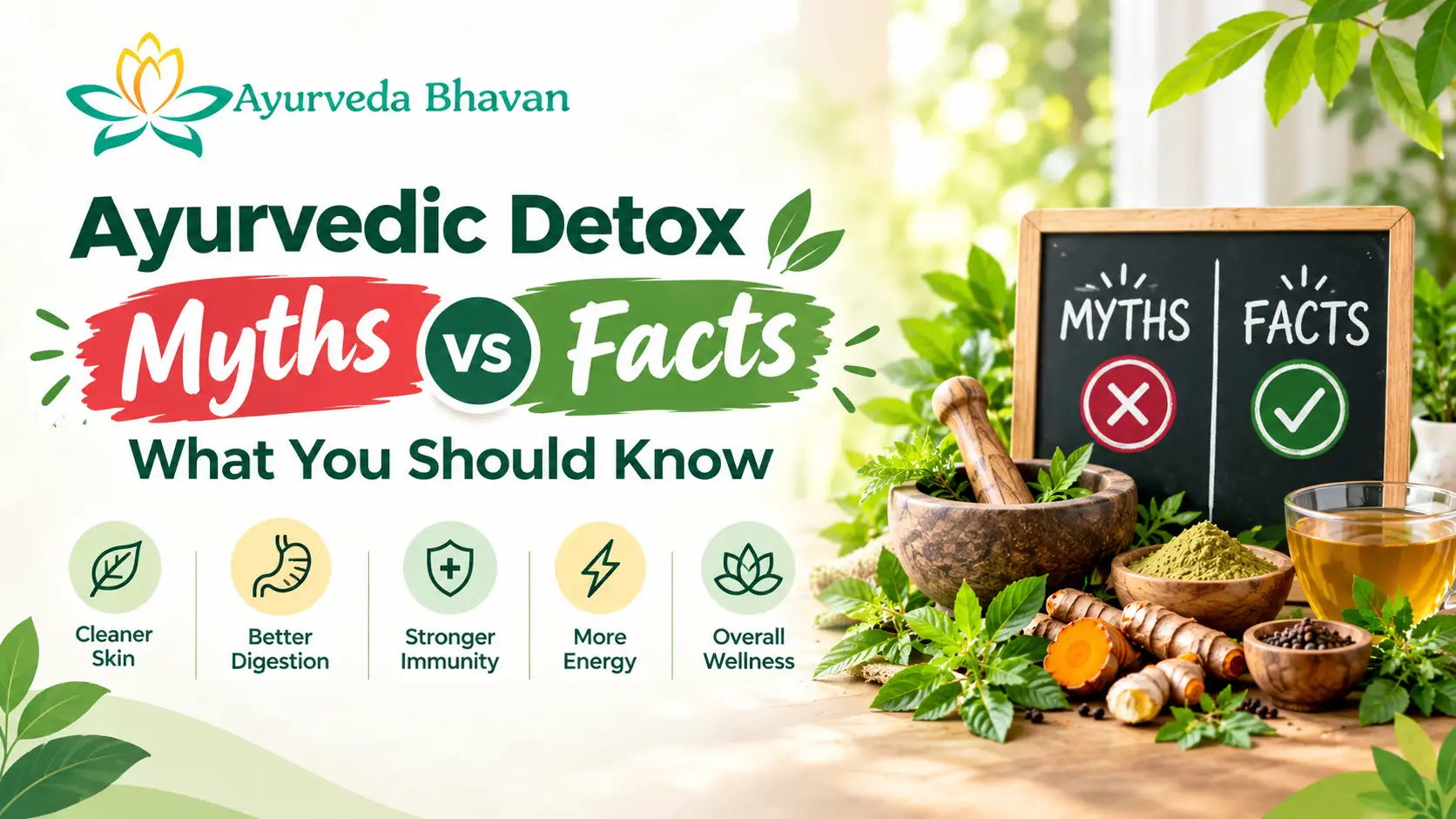
Ayurvedic Detox Myths vs Facts: What You Should Know
Detox is one of those buzzwords that are being used a lot these days. From juice fasts, to teas that detoxify your body, to three-day “reboot” programs – you will find it all on social media. And then somewhere in the middle of all this commotion, Ayurvedic detox also gets clubbed under one of these categories, and to be honest, that is not doing it any justice. At Ayurveda Bhavan, we come across such people on a weekly basis.
So let’s slow down and talk about it properly. This blog breaks down the real ayurvedic detox myths vs facts, so you know exactly what you’re signing up for before you try it.
Why So Many Myths Exist Around Ayurvedic Detox
Ayurveda has been practiced for over 5,000 years but is currently being discussed in 60-second video clips on the Internet. And that is why the misconceptions start to happen. People hear words like “panchakarma” or “detoxification” and think that it involves starving oneself and consuming something disgusting for a week. But there’s more to it. Ayurveda detoxification is not about a simple regimen; it is a prolonged process adjusted according to your body type and health.
And if you are one of those people who enjoy hands-on approach as opposed to self-reading blogs and articles, then you should definitely try Ayurvedic Detox yoga Retreat in Rishikesh as your first experience with Ayurveda.
Common Myths About Ayurvedic Detox
Let’s get into the myths people believe most often — and why they don’t hold up.
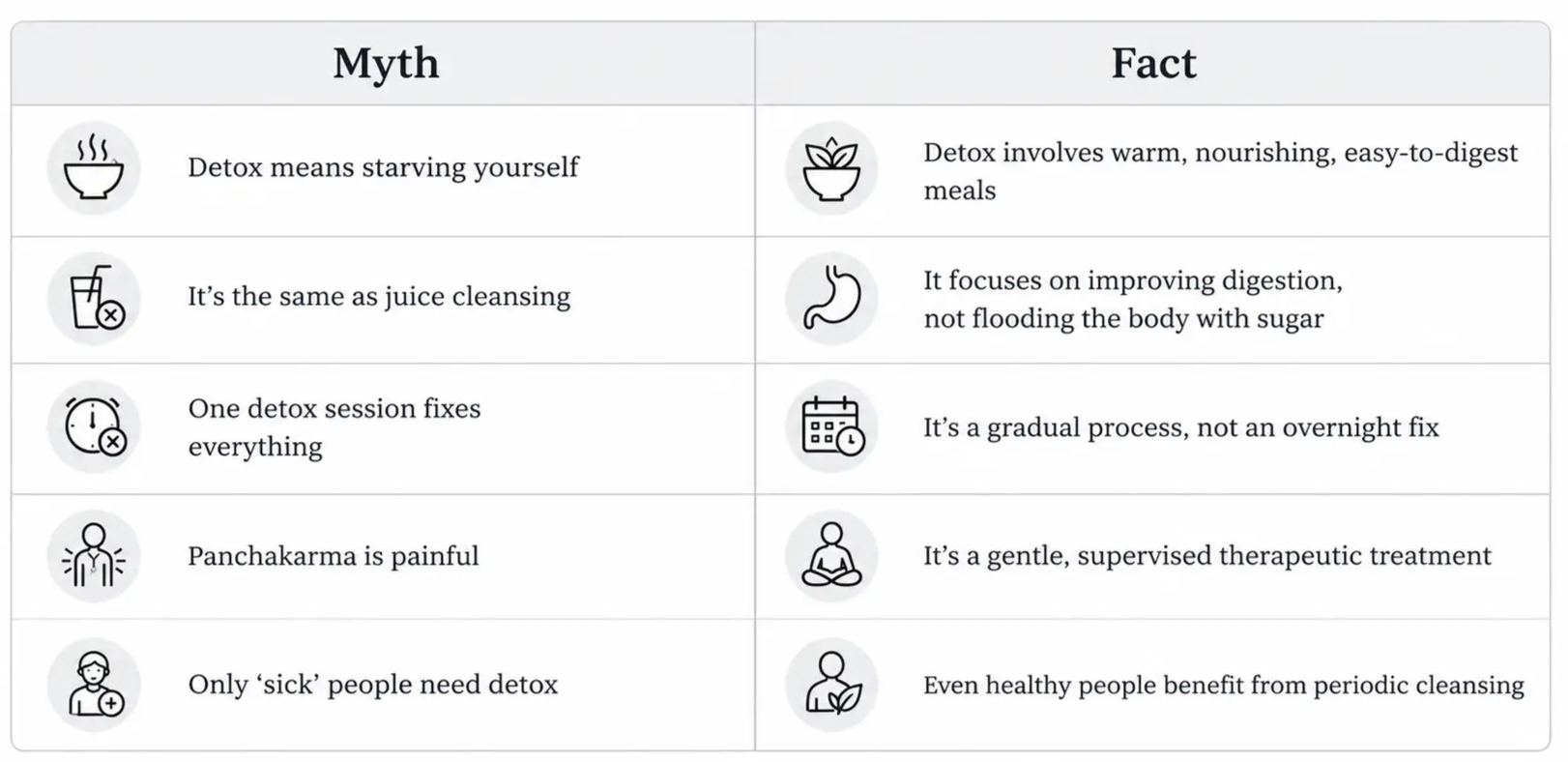
Myth 1: Ayurvedic Detox Means Fasting for Days
This is the largest misconception about Ayurveda. People think that when one undergoes detoxification, they starve themselves. The truth is, Ayurvedic detox often requires warm and easily digested food such as kitchari, soups, or warm water, but never fasting. Fasting can be applied in some cases, but only in moderation.
Myth 2: It’s the Same as a Juice Cleanse
Juicing, on the other hand, introduces loads of sugar and acids into your body, irritating your digestion. Ayurveda does the reverse – it emphasizes on stimulating Agni, or digestive fire.
Myth 3: Detox Is a One-Time Quick Fix
Most people believe that a three day detoxification process is sufficient for undoing years of bad digestive health. The practice of Ayurveda is not something that happens instantly; rather it is a gradual and corrective process which takes place by utilizing the body’s own ability to restore itself.
Myth 4: Panchakarma Is Painful or Extreme
This misconception frightens many people the most. In reality, Panchakarma is a healing therapy done under the guidance of an expert physician, which includes massage with oils and elimination techniques.
Myth 5: You Need to Be “Very Unwell” to Need a Detox
Not true at all. Even people who feel generally fine often carry low digestion, poor sleep, bloating, or sluggishness without realizing it. Ayurvedic detox is as much about prevention as it is about cure.
Facts About Ayurvedic Detox You Should Actually Know
Now let’s flip it around and look at what Ayurvedic detox really is.
Fact 1: It’s based on your dosha (body constitution) — Vata, Pitta, or Kapha — so no two detox plans look exactly the same.
Fact 2: Diet plays a central role. You’re guided toward warm, seasonal, dosha-balancing foods instead of being told to eat nothing.
Fact 3: Herbal support, like triphala or specific churnas, is used to gently support the gut and liver — not shock them.
Fact 4: Daily routines (dinacharya) such as oil massage, proper sleep timing, and mindful eating are part of the detox, not side notes.
Fact 5: Panchakarma, when done properly, is medically guided and tailored to your health history — it’s a treatment, not a trend.
For anyone genuinely dealing with digestive issues, fatigue, or chronic imbalance, a structured Panchakarma Treatment in Rishikesh often gives far better, longer-lasting results than any short-term detox plan found online.
Quick Myth vs Fact Summary
How to Know If Ayurvedic Detox Is Right for You
In case you are having issues like constant bloating, fatigue, inconsistent digestion, poor quality sleep or simply feel that something is out of whack, then you may wish to consider trying it. It all comes down to doing it correctly, which means having it done under proper supervision, as opposed to doing whatever you may have picked up from some random websites on the internet.
Final Thoughts
This type of detox program is not about self-deprivation or punishment; rather, it is about knowing yourself and what your body truly requires. By distinguishing facts from fiction, one will be able to understand why this ancient form of healing is still practiced after all these years.
And if you want to do it the right way, then it makes sense to check out Ayurveda Bhavan.
Recommended Posts

6 Ayurvedic Detox Practices to Clean Your Body & Mind Naturally
October 1, 2026
What Is Ayurvedic Rejuvenation & How Does It Transform Health?
September 8, 2026
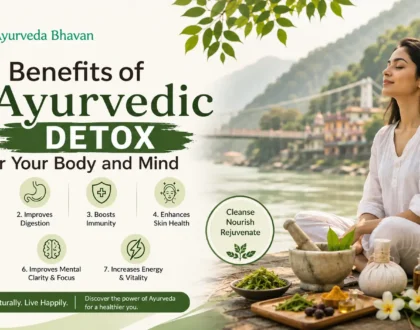
7 Benefits of Ayurvedic Detox for Your Body and Mind
September 1, 2026