
How to Practice Jal Neti Safely at Home: A Step-by-Step Guide
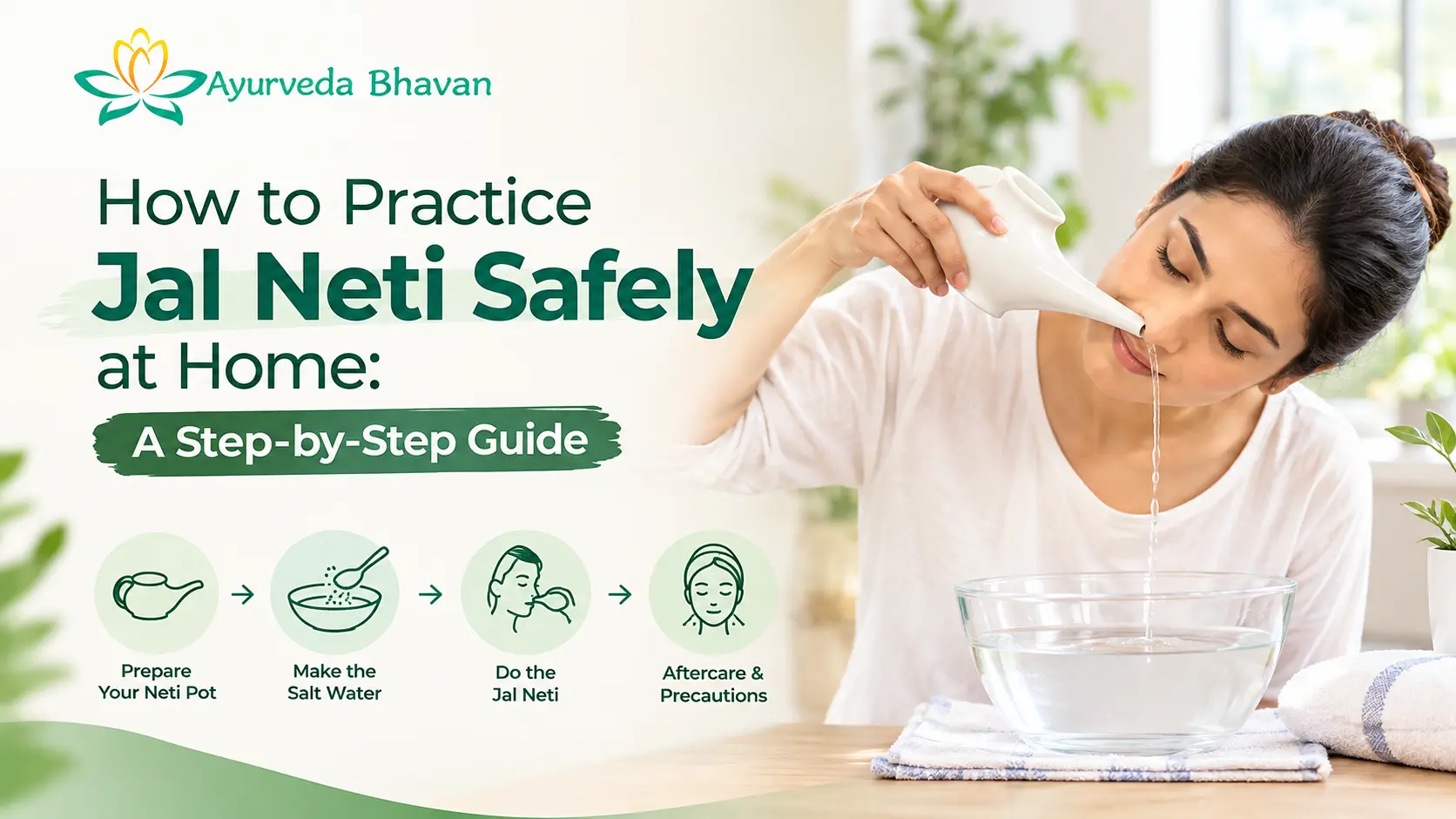
Quick Answer: What Is Jal Neti?
Jal neti is a process of cleansing the nasal passages by passing warm salted water from one nostril and allowing it to drain out through the other. Jal neti washes away dust and debris. It should take about five minutes when done properly, using just a neti pot, some water, and a small amount of non-iodized salt.
Here’s how you can perform this process successfully and safely on your own – use the proper water, the proper salt, and the proper posture.
What Is Jal Neti and Why Do People Practice It?
The words “jal” mean water while “neti” stands for cleansing of the nasal passage. Jal neti is one of the six cleansing practices (shatkarma) of yoga and it has been practiced by people in India for centuries.
Now consider how you clean your teeth daily. The nose handles dust, pollen, smoke, bacteria all day long, but none of us cleanses his nose. Jal neti is just a harmless way of doing so.
In Ayurveda Bhavan, we frequently come across people who are interested in neti practice but are hesitant in performing it on their own. That is why we prepared this guide on jal neti procedure. Just read it through and you’ll learn how to perform it with safety.
Benefits of Jal Neti
The benefits of jal neti come from one simple action: keeping the nasal passage clean and moist. Many people who practice it regularly report the following:
- Clearer breathing. Rinsing away thick mucus can make it easier to breathe through your nose.
- Relief from seasonal allergies. Washing out pollen and dust may reduce sneezing and itchiness.
- Fewer cold-like symptoms. Salt water rinses are often used to ease the stuffiness that comes with a cold or sinus irritation.
- A lighter head. Many people feel less heaviness around the forehead and cheeks after a session.
- Better comfort in polluted cities. If you live or work where dust and smoke are common, a rinse can help clear what has settled in your nose.
- A calmer mind. The slow, mindful nature of the practice helps many people feel relaxed and focused.
Please note: Jal neti is a cleansing practice, not a cure for any disease. Results differ from person to person, and it works best alongside a healthy lifestyle and proper medical care when needed.
Traditional Benefits of Jal Neti
According to traditional yoga and Ayurveda, the nasal cavity is considered as the entry point into the head. Traditional literature indicates that clearing this entry point helps to regulate the breathing process (prana) and maintain the “cool and clear” condition of the head.
The following is the traditional view on the benefits of performing Jal Neti:
-Balancing kapha dosha which is related to mucus, heaviness and congestion.
-Preparation of the body for practicing Pranayama because clear nostrils enable deep breathing.
-Improves the sense of smell and eyes.
-Increases concentration before meditating.
This information is from tradition not modern scientific laboratory experiments.
If you would like to learn neti under expert guidance, many seekers join yoga classes in rishikesh, where teachers demonstrate cleansing techniques in person and correct your posture in real time.
What You Need Before You Start
Get these things ready first:
- A neti pot. Ceramic, steel, or BPA-free plastic all work. It should have a comfortable spout that fits snugly against your nostril.
- Safe water. Use distilled water, or tap water that has been boiled for a few minutes and cooled to lukewarm. Never use plain tap water straight from the faucet.
- Salt. Use plain, non-iodized salt such as sea salt or rock salt. Avoid table salt with additives.
- A clean basin or sink.
- A soft towel or tissue.
Simple salt water recipe: Mix about ¼ teaspoon of salt in 250 ml (one cup) of lukewarm water. It should taste slightly salty, like tears. If it stings, you may have added too much salt or the water may be too hot or cold.
Step-by-Step: How to Practice Jal Neti Safely at Home
Follow these steps slowly. There is no rush.
Step 1: Prepare the water. Mix the salt into lukewarm water until it fully dissolves. Fill your neti pot.
Step 2: Stand over a sink. Bend forward from the waist so your head is over the basin.
Step 3: Tilt your head. Turn your head gently to one side, say the right, so the left nostril is on top.
Step 4: Insert the spout. Place the spout in the upper nostril. Make a gentle seal, but do not push it in hard.
Step 5: Breathe through your mouth. This is very important. Keep your mouth open and breathe calmly, like saying a soft “aaah.” Do not sniff or talk.
Step 6: Raise the pot slowly. Lift the pot so the water flows into the upper nostril and comes out of the lower one. This takes a few seconds.
Step 7: Repeat on the other side. Use about half the water on each side. Switch your head tilt and repeat.
Step 8: Clear your nose gently. Bend forward, let the leftover water drain, and breathe out through your nose in soft, short breaths. Blow gently, one nostril at a time. Never blow hard.
Step 9: Dry the nose. Stand upright, bend forward, and shake your head slowly from side to side to let trapped water drain. Then pat your nose dry.
Step 10: Wait a little. Avoid going out in cold wind right after neti. Give your nose 15 to 20 minutes to settle.
How Many Times a Week Should You Do Jal Neti?
Here is a simple guide:
| Your situation | Suggested frequency |
| Beginner, no health issues | 2 to 3 times a week |
| Regular practitioner | Once a day in the morning, or every other day |
| Allergy season or heavy dust exposure | Once a day, as it feels comfortable |
| Cold or blocked nose | Once a day for a few days, then reduce |
| Feeling dry or irritated after neti | Reduce to once or twice a week |
Golden rule: More is not better. Doing jal neti too often can dry out the nose lining and wash away its natural protective mucus. Listen to your body. If your nose feels sore or dry, take a break.
The best time is early morning on an empty stomach, before yoga or pranayama.
Common Mistakes to Avoid
Most problems with neti come from small errors. Watch out for these:
- Using untreated tap water. This is the biggest risk. Tap water can carry germs. Always use distilled, or boiled and cooled, water.
- Using too much or too little salt. Too much stings, and too little also causes burning.
- Water that is too hot or too cold. Aim for lukewarm, close to body temperature.
- Breathing through the nose during the rinse. This can push water the wrong way and make you cough or feel water in the throat.
- Tilting the head backward. Keep your head tilted sideways, not back.
- Blowing your nose hard afterward. This can push water into the ear passage and cause discomfort.
- Not cleaning the neti pot. Wash it with warm soapy water after every use and let it air dry.
- Practicing with a full-blown cold and fever. Wait until you feel better, or ask a doctor first.
- Skipping drying. Leftover water in the nose can lead to irritation or a mild headache.
- Rushing. Neti is a calm practice. If you feel panicked, stop and try again later.
Precautions: Who Should Be Careful?
Jal neti is gentle for most healthy adults, but please pause and get advice if any of these apply to you:
- You have frequent nosebleeds.
- You have had recent nasal, sinus, or ear surgery.
- Your nose is completely blocked on one or both sides.
- You have a deviated septum, nasal polyps, or a chronic sinus condition.
- You have an ear infection or ear pain.
- You are pregnant or planning to give neti to a child.
- You have any long-term health condition.
In these cases, please speak to a qualified doctor or a trained yoga therapist first. If you feel pain, dizziness, or bleeding while doing neti, stop right away.
For those who want personal guidance, our ayurvedic and panchakarma centre rishikesh is a good place to begin, as trained practitioners can check your constitution and advise whether neti suits you.
Simple Tips for a Better Jal Neti Practice
- Try it at the same time each day, so it becomes a habit.
- Keep a separate pot for personal use only.
- Make fresh salt water each time. Don’t store it.
- Follow neti with a few minutes of slow breathing.
- Stay relaxed. A tense face and jaw make the water flow harder.
- Give it a week or two. Your body needs time to get used to the feeling.
Frequently Asked Questions
Is jal neti safe to do at home?
Yes, for most healthy adults it is safe when you use clean, lukewarm, boiled-and-cooled or distilled water, the right amount of salt, and the correct technique.
Which water is best for jal neti?
Distilled water is best. Boiled and cooled water is also fine. Never use untreated tap water.
How much salt should I use?
About ¼ teaspoon of non-iodized salt in 250 ml of lukewarm water is a good starting point.
Can I do jal neti every day?
Many people do, especially in allergy or dusty seasons. If your nose feels dry or sore, cut down to a few times a week.
Does jal neti hurt?
It should not. You may feel a mild tingle or a strange sensation at first. Pain or burning usually means the water, salt, or position needs adjusting.
What if water goes into my throat or ear?
Stop, lean forward, and let it drain. Next time, keep your mouth open, your head tilted sideways, and lift the pot more slowly.
When should I avoid jal neti?
Avoid it if you have a nosebleed, a fully blocked nose, a fever, an ear infection, or recent surgery, unless a doctor says otherwise.
Can beginners learn jal neti from a video?
Videos help, but learning from a trained teacher for the first few sessions is even better.
Final Thoughts
Jal neti is a small, simple habit that can make a real difference to how your nose and head feel. The benefits of jal neti are best enjoyed when the practice is gentle and consistent, not forced or overdone.
Keep this full jal neti guide handy the first few times. Take it slowly, stay relaxed, and use clean water, and you will soon be able to practice jal neti safely at home as part of your daily routine.
At Ayurveda Bhavan, we believe healthy living starts with simple, natural habits. If you have questions about neti, yoga, or Ayurvedic care, our team is always happy to help.
Disclaimer: This article is for general information only and is not a substitute for medical advice. Please consult a qualified doctor before starting any new practice, especially if you have a health condition.
Recommended Posts

Top 10 Best Wellness Retreats in Rishikesh
September 15, 2026

How to Choose the Best Ayurvedic and Panchakarma Doctor in Rishikesh
September 14, 2026

Is Yoga Good for Beginners? A Complete Beginner’s Guide
September 11, 2026
