5 Stages of Panchakarma Detox: A Complete Guide for Beginners
If you have been feeling lethargic, bloated, brain-fogged, or just “off” for far too long now, you’re certainly not alone. We all live with a constant burden of stress, bad sleep, and unhealthy eating habits. And our body takes account of it all. Here is when Panchakarma comes in. At Ayurveda Bhavan, we get to see many new people asking the exact same question, “What really goes on in Panchakarma?” Well, here is to explain it all in clear and concise terms – no complicated Sanskrit terms allowed!
What Is Panchakarma, Really?
In Sanskrit, Panchakarma means “five actions” or “five treatments”. It is an age-old Ayurvedic cleansing procedure which has been practiced for several thousand years and helps in detoxifying your body and mind of toxins, which are referred to as “ama” in Ayurveda. Imagine it as a complete system cleanse rather than a quick cleanse.
Unlike fast weight loss or cleansing procedures available on the internet, Panchakarma works in harmony with your body’s rhythm and it is very gentle and works in the right direction as opposed to masking the problem.
Now that we have covered some introductory facts about Panchakarma, let us move forward and learn about the 5 steps of detoxification process in Panchakarma.
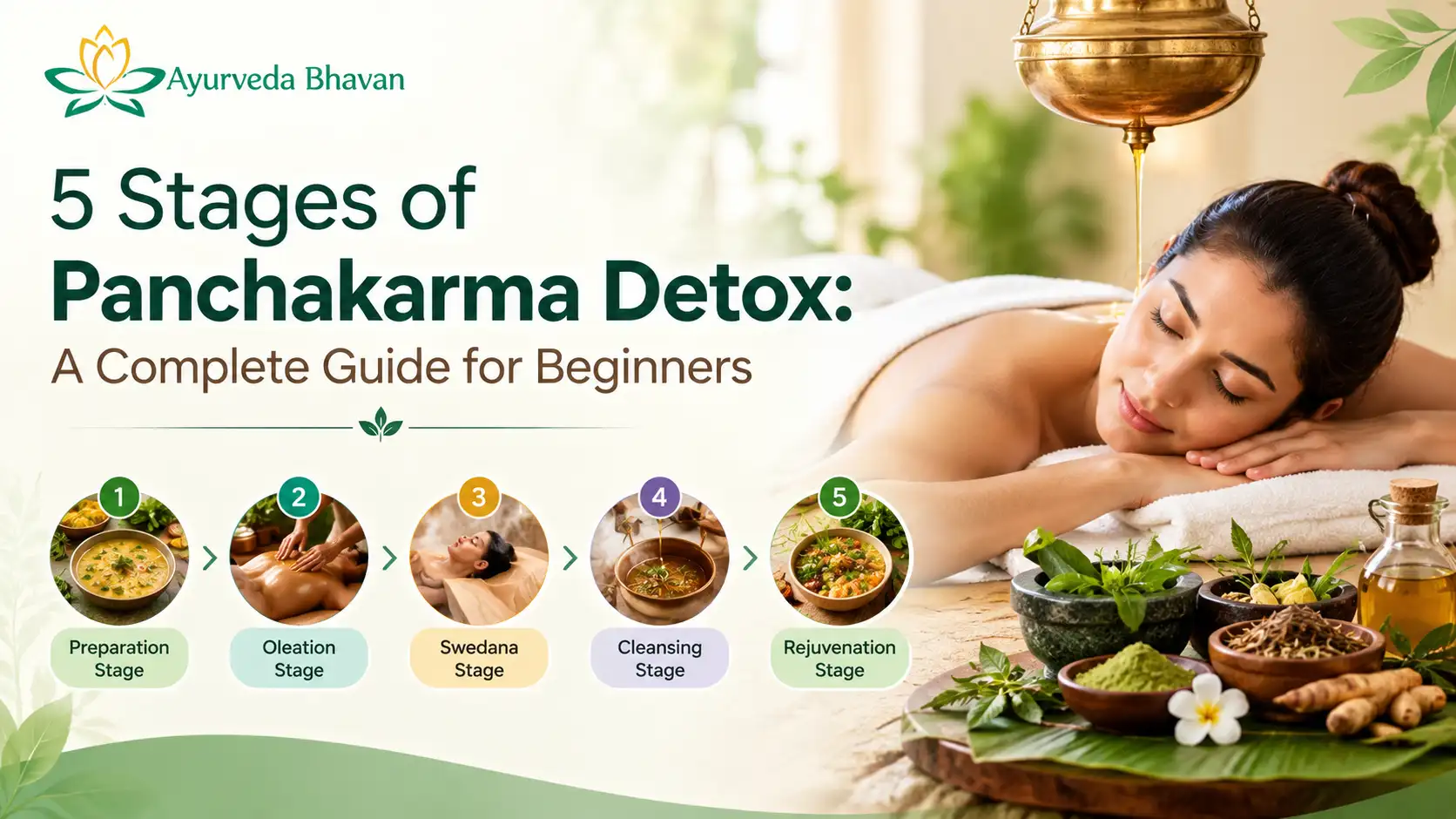
Stage 1: Poorvakarma (Pre-Treatment Preparation)
Before any real detox begins, your body needs to be “prepped.” This stage has two parts:
- Snehana (Oleation): Warm medicated oils are massaged into your body, or sometimes consumed internally. This softens tissues and helps toxins move from deep cells toward the digestive tract.
- Swedana (Sudation): Herbal steam therapy is used to open up your pores and channels, making it easier for toxins to flow out.
This stage usually lasts a few days and feels surprisingly relaxing — like a warm, oily massage session rather than a harsh detox. But don’t be fooled by how gentle it feels; it’s doing serious groundwork.
Stage 2: Vamana (Therapeutic Vomiting)
It sounds like a really drastic procedure, but it’s quite a supervised procedure that cannot be carried out on your own. The procedure of Vamana is usually performed on patients who have excess of Kapha Dosha in their body (issues with mucus and congestion).
During this procedure, under the supervision of an expert, the patient is administered a mild herbal emetic which helps remove the toxins from the stomach and respiratory system. This procedure isn’t unpleasant at all, it’s one of the most efficient procedures of detoxification.
Stage 3: Virechana (Purgation Therapy)
If Vamana targets the upper body, Virechana focuses on cleansing the lower digestive system — mainly the liver and intestines. Herbal laxatives are used to flush out Pitta-related toxins (the ones linked to inflammation, acidity, skin issues, and anger or irritability).
Many beginners say this is the stage where they start noticing real changes — clearer skin, better digestion, and a general feeling of “lightness.”
Stage 4: Basti (Medicated Enema)
Basti has rightly earned its name as the king of Panchakarma therapies, and here is why. Basti works specifically on Vata dosha and takes care of the nerves, joints, and all movements in the body.
It involves administering herbal oil or decoction through the rectum that provides nutrition to the body tissues, lubrication to the joints, and calming effect on the overactive nerves. It has been particularly useful for individuals facing issues such as anxiety, joint pain, constipation, and restlessness.
Stage 5: Nasya (Nasal Therapy)
The final stage focuses on your head and neck region. Medicated oils or herbal powders are administered through the nostrils to clear out toxins from the sinuses, throat, and head.
Nasya is particularly good for people struggling with headaches, sinus congestion, migraines, or mental fog. It’s a short treatment, but many people describe an immediate sense of clarity right after.
Is Panchakarma Treatment Right for Beginners?
Of course, but it must be done properly. Treatment using the Panchakarma method must begin with consultations for those who are trying it for the first time. Not everybody requires all five stages, and a licensed Ayurveda specialist will determine this according to your dosha (constitution), your condition, and your lifestyle.
A hasty approach to this therapy may turn out to be counterproductive. This is why finding a reliable center is most important.
Why the Panchakarma Purification Process Takes Time
Many newbies always believe in instant results. However, the Panchakarma detox program is not an instant process; rather, it is a slow and gradual process, which is a process based on how the body heals. Detoxification is done in three phases, which are: preparation, elimination, and rejuvenation. Omitting any phase or going fast will lessen its efficacy.
This process does indeed reward patience, as many people start to feel lighter and calmer when they have completed the entire process.
Where Should You Experience Authentic Panchakarma?
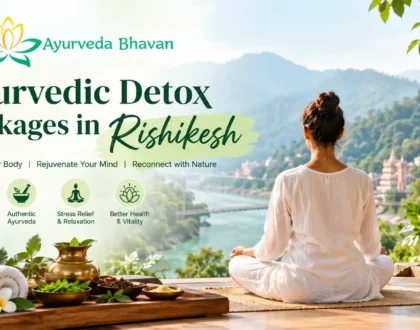
Location genuinely matters when it comes to Ayurvedic healing. The environment, climate, food, and even the energy around you play a role in how well your body responds to treatment. That’s why so many people choose a panchakarma detox yoga retreat in Rishikesh — the combination of the Himalayan foothills, the Ganges, clean air, and a yoga-centered daily routine creates the perfect setting for your body to truly reset and heal.
Final Thoughts
Panchakarma isn’t just a detox — it’s a reconnection with your body’s natural intelligence. Each of these five stages plays a specific role in removing toxins, restoring balance, and helping you feel like yourself again. If you’re a beginner, don’t try to do this alone or rush the process. Find a trusted, experienced team who can guide you safely through each phase.
At Ayurveda Bhavan, we believe real healing takes time, care, and the right expertise — and that’s exactly what we’re here to offer.
Recommended Posts
Best Ayurvedic Health and Beauty Treatment in Rishikesh
October 21, 2026
Ayurvedic Detox Package in Rishikesh with Prices
October 12, 2026