
Can Yoga Improve Sleep 6 Poses to Practice Before Bed
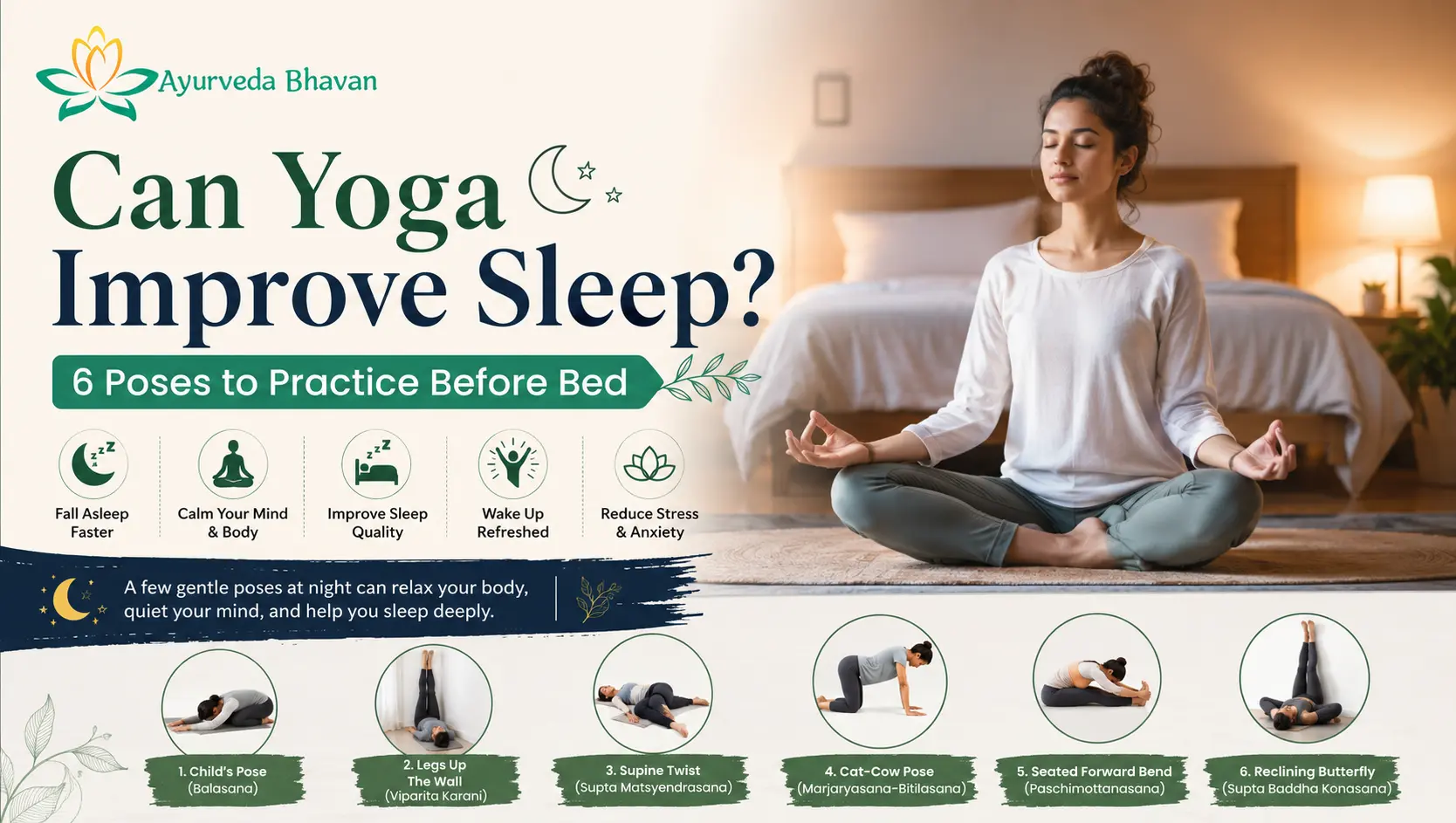
Quick answer: Yes, yoga can improve sleep. Gentle, restorative yoga calms the nervous system, lowers cortisol, and signals the body that it’s time to rest. A short nighttime yoga routine of 10–15 minutes — using poses like Child’s Pose, Legs-Up-the-Wall, and Supine Spinal Twist — can help you fall asleep faster and sleep more deeply.
Why Yoga Helps You Sleep Better
Sleep struggles are often rooted in an overactive nervous system — racing thoughts, muscle tension, and a body that hasn’t been told it’s safe to power down. Gentle yoga exercises for better sleep work by shifting the body out of “fight or flight” mode (sympathetic nervous system) and into “rest and digest” mode (parasympathetic nervous system).
Slow breathing, held stretches, and forward folds:
- Reduce muscle tension built up from a day of sitting or stress
- Lower heart rate and blood pressure
- Calm mental chatter through breath-focused movement
- Support the body’s natural melatonin production by easing stress hormones
This is why relaxing yoga before bed is different from a regular yoga class — the goal isn’t strength or flexibility, it’s downregulation.
How to Build a Nighttime Yoga Routine
A good nighttime yoga routine follows three simple rules:
- Keep it slow. No sun salutations or cardio-style flows — movement should be gentle and grounded.
- Hold poses longer. Stay in each pose for 1–3 minutes, breathing deeply, rather than flowing quickly between them.
- Do it in low light. Dim the lights, keep your phone away, and practice on your bed or a mat right beside it.
Below are 6 poses to practice before bed, in an order that moves from gentle activation to full relaxation.
6 Poses to Practice Before Bed
1. Child’s Pose (Balasana)
Kneel on the mat, sit back onto your heels, and fold forward with arms extended or resting by your sides. This pose gently stretches the lower back and hips while calming the mind. Hold for 1–2 minutes with slow, deep breaths.
2. Cat-Cow Stretch (Marjaryasana-Bitilasana)
On hands and knees, alternate between arching and rounding the spine in sync with your breath. This releases tension in the back and neck built up from the day. Do 8–10 slow rounds.
3. Seated Forward Fold (Paschimottanasana)
Sit with legs extended, and fold forward from the hips, letting your hands rest on your shins or feet. This is one of the best yoga poses for sleep because forward folds naturally soothe the nervous system. Hold for 1–2 minutes.
4. Supine Spinal Twist (Supta Matsyendrasana)
Lying on your back, drop both knees to one side while keeping shoulders grounded. This gentle twist relieves tension in the spine and lower back. Hold for 1 minute per side.
5. Legs-Up-the-Wall Pose (Viparita Karani)
Lie on your back and rest your legs up against a wall or headboard, arms relaxed by your sides. This restorative pose improves circulation and is widely considered one of the most effective yoga exercises for better sleep. Hold for 3–5 minutes.
6. Corpse Pose (Savasana)
Lie flat on your back, arms and legs relaxed, eyes closed. Focus on slow, even breathing as you scan and release tension through the body. This final pose is a bridge straight into sleep — hold for as long as feels comfortable.
Frequently Asked Questions
Does yoga before bed actually improve sleep quality? Yes. Practicing gentle yoga to improve sleep quality has been associated with reduced insomnia symptoms, lower stress levels, and easier time falling asleep, largely due to its calming effect on the nervous system.
How long should a bedtime yoga routine be? 10–15 minutes is enough. The goal is relaxation, not a workout, so even 3–4 poses done slowly can be effective.
What is the best yoga pose for sleep? Legs-Up-the-Wall and Savasana are consistently ranked among the best yoga poses for sleep because they require no effort and directly activate the body’s relaxation response.
Can beginners do gentle yoga for sleep? Yes. These poses require no prior experience and are safe for most people. Move slowly, breathe deeply, and stop if anything feels uncomfortable.
Conclusion
A consistent nighttime yoga routine is one of the simplest, most natural ways to fall asleep faster and wake up feeling rested. Start with these 6 poses to practice before bed, focus on your breath, and give your body the signal it needs to truly unwind. If you’d like guided support in building this practice, Ayurveda Bhavan offers structured, restorative sessions rooted in traditional wellness practices — and for those looking to go deeper, exploring the best yoga classes in Rishikesh is a great next step toward building a lasting, sleep-friendly yoga practice.
Recommended Posts

Ayurvedic Detox Package in Rishikesh with Prices
October 12, 2026

5 Easy Yoga Poses to Support Healthy Hair Growth
October 6, 2026

Top 10 Best Yoga Retreat Centres in Rishikesh
September 28, 2026