
Daily Ayurvedic Practices That Control Your Diabetes
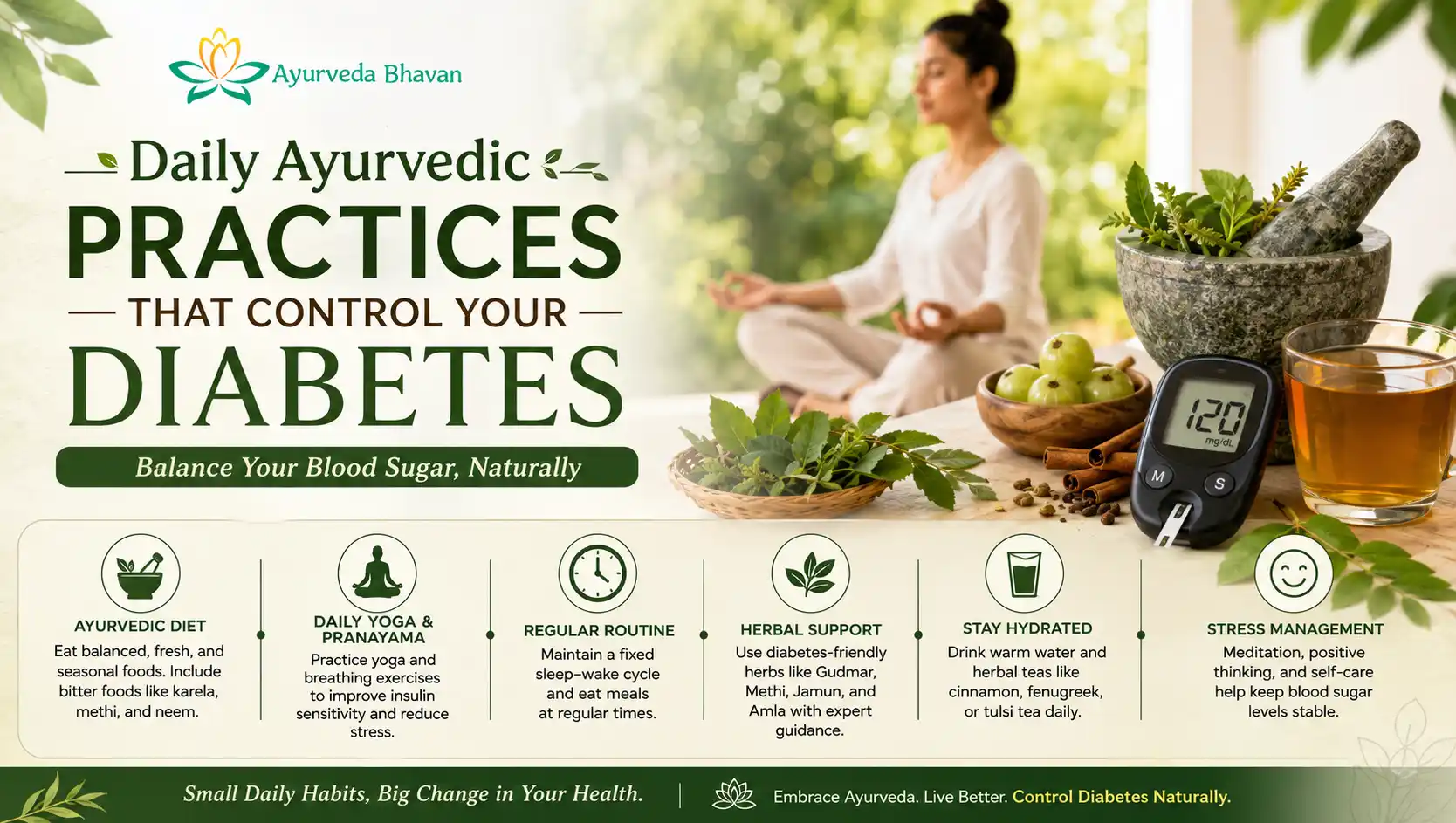
Living with diabetes doesn’t have to mean a life ruled by medicines and constant worry. For thousands of years, Ayurveda has offered a gentler, more balanced way to manage blood sugar through daily habits, food choices, and herbs that work with your body rather than against it. At Ayurveda Bhavan, we often meet people who are surprised to learn how much of diabetes care actually comes down to consistent, simple routines rather than complicated treatments. If you’re looking for Ayurvedic practices that control your diabetes naturally, this guide walks you through what actually works and why.
Why Ayurveda Looks at Diabetes Differently
In Ayurvedic diabetes management, blood sugar imbalance (referred to as “Prameha”) isn’t treated as an isolated problem. It’s seen as a result of poor digestion, weak metabolism, and lifestyle imbalance building up over time. This is why Ayurvedic diabetes care doesn’t just focus on cutting sugar — it focuses on fixing digestion, improving metabolism, reducing toxins (ama), and restoring balance to the whole body. This whole-body approach is what makes Ayurvedic lifestyle for diabetes so effective when followed consistently.
Morning Routine: The Foundation of Blood Sugar Balance
How you start your day sets the tone for your blood sugar levels.
Wake up early and drink warm water. Starting the day with warm water, sometimes with a few soaked fenugreek seeds strained into it, helps kickstart digestion and supports healthy blood sugar management right from the morning.
Practice tongue scraping and oil pulling. These small rituals remove toxins that build up overnight and are believed to support better metabolic function throughout the day.
Move your body before breakfast. A brisk 20-30 minute walk or gentle yoga session activates circulation and helps muscles use glucose more efficiently. This is one of the simplest yet most powerful Ayurvedic practices for blood sugar that people often overlook.
Yoga and Pranayama for Diabetes Control
Certain yoga postures are specifically known to support the pancreas and improve insulin sensitivity:
- Dhanurasana (Bow Pose) – stimulates abdominal organs including the pancreas
- Paschimottanasana (Seated Forward Bend) – aids digestion and reduces stress
- Ardha Matsyendrasana (Half Spinal Twist) – improves circulation to internal organs
Alongside asanas, breathing practices like Kapalbhati and Anulom Vilom are widely used in natural diabetes management because they calm the nervous system and reduce stress hormones, which are known to spike blood sugar levels.
Ayurvedic Diet for Diabetes
Food is medicine in Ayurveda, and an Ayurvedic diet for diabetes is built around foods that release energy slowly and don’t overload the digestive fire (agni).
Foods to include regularly:
- Bitter gourd (karela) — a staple in diabetes-friendly Ayurvedic diet plans
- Fenugreek seeds (methi)
- Whole grains like barley and millet instead of refined flour
- Leafy greens and fibrous vegetables
- Warm, freshly cooked meals over cold or processed food
Habits that matter as much as what you eat:
- Eat your largest meal at midday when digestion is strongest
- Avoid eating late at night
- Chew food slowly and avoid distractions while eating
- Don’t skip meals, as this can cause unpredictable sugar spikes later
This approach to eating isn’t a restrictive diet — it’s a rhythm that, once built into daily life, becomes second nature.
Ayurvedic Herbs for Blood Sugar Support
Several herbs have long been valued in Ayurvedic herbs for blood sugar support routines:
- Bitter gourd extract – traditionally used to support healthy glucose metabolism
- Fenugreek seeds – known for their fiber content that may slow sugar absorption
- Turmeric – valued for its role in supporting overall metabolic balance
- Gudmar (Gymnema Sylvestre) – literally means “sugar destroyer” in Sanskrit and has a long history of traditional use
- Amla (Indian Gooseberry) – rich in Vitamin C and used to support overall vitality
It’s important to remember that herbs work best as part of a consistent lifestyle, not as standalone fixes, and should ideally be taken under guidance rather than self-prescribed.
Sleep and Stress: The Overlooked Pillars
Many people focus only on diet and forget that poor sleep and chronic stress directly affect blood sugar. Ayurveda places huge importance on sleeping and waking at consistent times, ideally sleeping by 10 PM. Poor sleep disrupts hormone balance, including insulin regulation.
Simple stress-reduction practices such as meditation, spending time in nature, and self-massage (abhyanga) with warm sesame oil are also considered essential Ayurvedic wellness practices for anyone managing diabetes long-term.
Building a Daily Routine (Dinacharya) for Diabetes
Here’s a simple structure many people find helpful:
- 5:30-6:00 AM – Wake up, drink warm water, light movement
- 6:30-7:30 AM – Yoga and pranayama
- 8:00 AM – Light, warm breakfast
- 12:00-1:00 PM – Main meal of the day
- Evening – Short walk after dinner (Vajrasana or a 10-minute walk aids digestion)
- 9:30-10:00 PM – Wind down, avoid screens, sleep by 10 PM
Consistency matters more than perfection here. Missing a day occasionally won’t undo your progress, but the habit of returning to the routine is what creates lasting results.
Frequently Asked Questions
Can Ayurveda cure diabetes completely? Ayurveda focuses on managing and controlling blood sugar levels naturally alongside supporting overall metabolic health. It works best as a complementary approach alongside regular medical monitoring.
How long does it take to see results with Ayurvedic practices? Most people notice gradual improvements in energy and digestion within a few weeks, while blood sugar changes typically take longer and should be tracked with regular testing.
Is it safe to combine Ayurvedic herbs with diabetes medication? This should always be discussed with a qualified doctor or Ayurvedic practitioner, since some herbs can interact with medication and dosages may need adjustment.
Final Thoughts
Managing diabetes through Ayurveda isn’t about drastic changes overnight — it’s about small, consistent daily choices that add up over time. From what you eat, to how you move, sleep, and manage stress, every part of your routine plays a role in keeping your blood sugar balanced naturally.
If you’re looking for personalized guidance, Ayurvedic Diabetes Treatment in Rishikesh offers a supportive environment where traditional wisdom meets modern understanding of health, helping you build a routine that actually fits your life.
This article is for informational purposes only and is not a substitute for professional medical advice. Please consult a qualified doctor or Ayurvedic practitioner before making changes to your diabetes management plan.
Recommended Posts

Ayurvedic Detox Package in Rishikesh with Prices
October 12, 2026

5 Easy Yoga Poses to Support Healthy Hair Growth
October 6, 2026

Top 10 Best Yoga Retreat Centres in Rishikesh
September 28, 2026