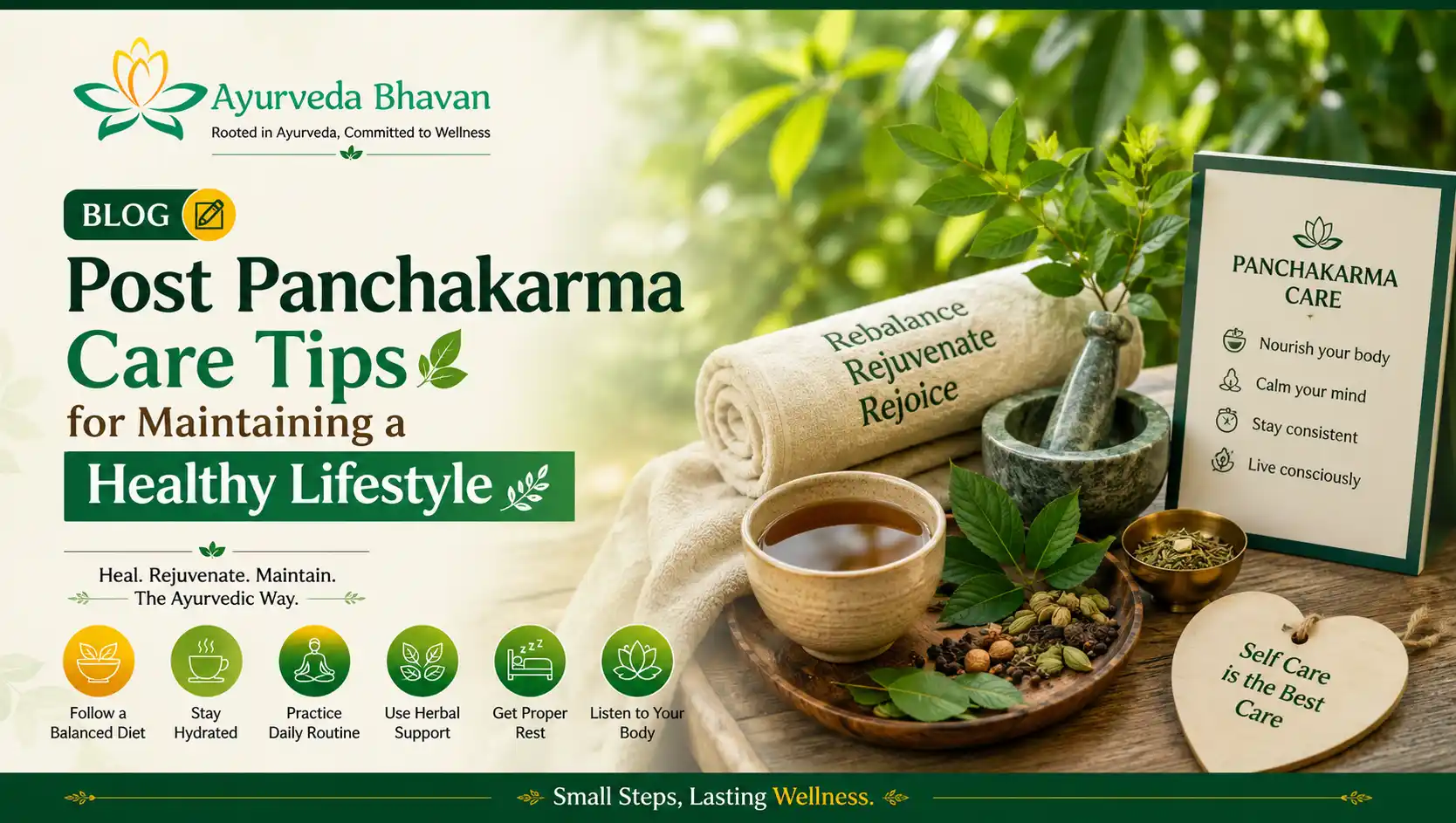
Post Panchakarma Care Tips for Maintaining a Healthy Lifestyle
Quick summary: Post Panchakarma care involves easing back into daily life gradually, eating warm and easily digestible foods, maintaining a consistent routine, and avoiding heavy, cold, or processed foods for at least two to three weeks after treatment. This aftercare period is what determines whether the benefits of Panchakarma actually last.
What Is Post Panchakarma Care?
Post Panchakarma care refers to the diet, routine, and lifestyle practices followed immediately after completing a Panchakarma detox program. Its purpose is to protect the body’s rebuilt digestive fire (agni) and help the nervous system transition smoothly back into normal daily activity.
Panchakarma clears the body of accumulated toxins and lowers digestive strength as part of the process. Without proper aftercare, sudden exposure to heavy food, stress, or intense activity can undo these results. With proper aftercare, the benefits — better digestion, clearer energy, improved sleep — tend to last for months.
Why Panchakarma Aftercare Matters
Panchakarma aftercare matters because the body remains in a sensitive, receptive state for one to three weeks after treatment ends.
Key reasons aftercare is essential:
- Digestive fire is weak initially — heavy or cold foods can cause bloating, discomfort, or reversal of detox benefits
- The nervous system is recalibrating — sudden stress or overstimulation can undo relaxation gains
- Tissues are still absorbing nutrients — quality of food directly affects how well the body rebuilds
Panchakarma Recovery Timeline
| Phase | Timing | Focus |
| Immediate recovery | Days 1–7 | Rest, light food, minimal activity |
| Transition phase | Week 2 | Gradual food variety, light movement |
| Stabilization | Week 3 onward | Return to regular but mindful eating |
| Long-term maintenance | Ongoing | Sustainable healthy habits |
Panchakarma Diet Plan: What to Eat and Avoid
A Panchakarma diet plan should reintroduce food gradually, starting light and building up over two to three weeks.
Foods to Eat After Panchakarma
- Warm khichdi (rice and moong dal)
- Steamed or lightly cooked seasonal vegetables
- Herbal teas (ginger, cumin-coriander-fennel, tulsi)
- Soaked, peeled almonds in small amounts
- Warm milk with turmeric or nutmeg (if dairy suits you)
- Ripe fruits like papaya or pomegranate, in moderation
Foods to Avoid After Panchakarma
- Cold foods and beverages
- Fried and processed foods
- Red meat and heavy proteins
- Carbonated drinks and excess caffeine
- Alcohol and tobacco
Panchakarma Post-Treatment Routine
A simple daily routine supports long-term results. Focus on these four habits:
- Sleep and wake at consistent times to support the body’s natural rhythm
- Add gentle movement such as walking or light yoga, avoiding intense workouts early on
- Practice 10 minutes of daily stillness through breathing exercises or meditation
- Continue self-massage (abhyanga) with warm sesame or herbal oil a few times a week
Lifestyle After Panchakarma: Long-Term Habits
Lifestyle after Panchakarma works best as an ongoing practice, not a one-time reset. Ayurveda recommends periodic Panchakarma with consistent habits in between.
Healthy habits after Panchakarma that are easy to maintain:
- Drink warm water instead of cold water throughout the day
- Eat your largest meal at midday, when digestion is naturally strongest
- Reduce screen time before bed
- Stretch or breathe deeply each morning
- Check in with an Ayurvedic practitioner as seasons change
Common Mistakes After Panchakarma Treatment
The most common recovery setbacks after Panchakarma treatment include:
- Returning to intense exercise too soon
- Eating out frequently in the first two weeks
- Skipping meals or under-eating
- Going back to high-stress environments immediately
- Consuming alcohol or caffeine too early
Mild fatigue or emotional sensitivity in the days after treatment is normal. Rest, hydrate, and keep meals simple until these symptoms settle.
FAQs on Post Panchakarma Care
How long should Panchakarma aftercare last? Most practitioners recommend at least one to three weeks of dedicated aftercare, with lighter versions of these habits continued long-term.
What is the best diet immediately after Panchakarma? Warm, soft, easily digestible foods like khichdi, cooked vegetables, and herbal teas are best for the first week.
Can I exercise right after Panchakarma? Light movement like walking or gentle yoga is fine. Intense workouts should wait at least one to two weeks.
Is it normal to feel tired after Panchakarma? Yes, mild fatigue or emotional sensitivity is common as the body adjusts. It typically resolves within a few days with proper rest and diet.
Final Thoughts
Post Panchakarma care is a gradual, deliberate continuation of the healing process, not a rigid checklist. Small, consistent choices around diet, rest, and daily routine determine whether the benefits of treatment last for weeks or for months.
The results you get also depend heavily on the quality of the Panchakarma package you choose in the first place, since a well-structured program sets the foundation that aftercare builds on. For a personalized Panchakarma package, post-treatment plan, and expert guidance on maintaining your results, Ayurveda Bhavan can help you build a routine suited to your body and lifestyle.
Recommended Posts

Ayurvedic Detox Package in Rishikesh with Prices
October 12, 2026

5 Easy Yoga Poses to Support Healthy Hair Growth
October 6, 2026

Top 10 Best Yoga Retreat Centres in Rishikesh
September 28, 2026